Small Batch Colorway Planning for MOQ and Mixed-Color Production
Use this small batch colorway planning guide to map fabric minimums, trims, cutting, unit cost and production decisions for sewn accessories.
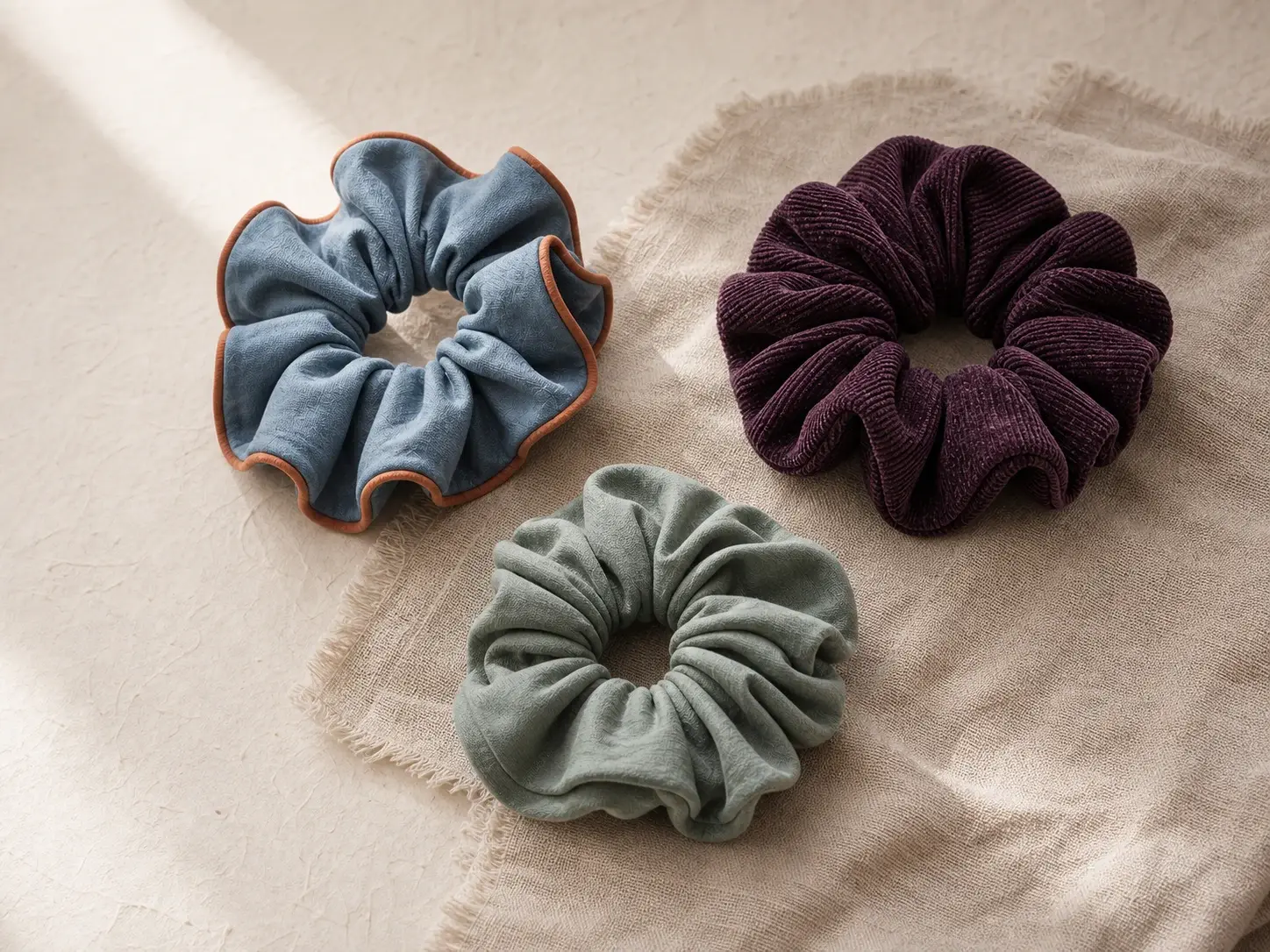
Small batch colorway planning can make a limited launch more useful, but mixed colors do not automatically share one material minimum. The production team may be able to sew one construction in several colors while the fabric mill, stock supplier, zipper source, elastic supplier or packaging printer treats each variation separately.
The conclusion: mixed colors are most efficient when construction, size, labels and packaging remain shared; each color has a clear commercial role; and material requirements are mapped before the finished-product MOQ is discussed.
Separate finished quantity from material minimums
Imagine a 300-piece hair-accessory run divided across three colors. The sewing plan may treat it as one style, but the material plan contains three fabric requirements. If each color uses an available fabric with enough stock, the split may be workable. If each color requires custom dyeing, every shade can introduce its own mill minimum.
The same applies to trims. Thread may be easy to match in small quantities, while custom elastic, printed ribbon, coated hardware or zipper tape may not be. A custom logo label can sometimes be shared across all colors, but different label colors multiply the component plan.
This is why “Can we mix colors within the MOQ?” is not a yes-or-no question until the bill of materials is visible. The right review connects finished units, consumption, cutting yield and supplier requirements.
Decide what remains common
The strongest mixed-color plan usually keeps these elements fixed:
- Pattern and finished dimensions.
- Sewing and assembly sequence.
- Lining structure and padding specification.
- Label size, artwork and placement.
- Packaging format and pack-out method.
- Quality checkpoints and tolerances.
Shared construction reduces pattern, setup and approval variation. It also makes customer response easier to interpret because color changes while function stays constant.
If a colorway changes fabric weight, stretch, coating or thickness, it may no longer behave like the same product. A heavier satin can gather differently. A different lining can change bulk or comfort. A pale fabric may require different opacity or stain-control decisions. Treat those as material changes, not just palette changes.
Give each color a job
A small range does not need many shades to look complete. Assign roles:
- Lead color: the clearest expression of the launch story.
- Commercial neutral: a lower-risk option that supports merchandising.
- Test color: a more directional choice that produces useful demand evidence.
This structure is more informative than splitting quantity evenly across many similar colors.
For hair accessories, visual contrast and silhouette may make color the main purchase signal. For sleep masks, color works alongside tactile feel, coverage and gifting context. The color plan should support the reason the customer buys the product.
Build a small batch colorway planning matrix
Create one row per variant:
| Decision | Color A | Color B | Color C |
|---|---|---|---|
| Planned finished units | Quantity | Quantity | Quantity |
| Outer material | Source/spec | Source/spec | Source/spec |
| Lining | Shared/specific | Shared/specific | Shared/specific |
| Thread and trim | Shared/specific | Shared/specific | Shared/specific |
| Label | Shared/specific | Shared/specific | Shared/specific |
| Packaging | Shared/specific | Shared/specific | Shared/specific |
| Allowed shade tolerance | Standard | Standard | Standard |
Then calculate consumption with expected cutting loss. Motifs, nap, bias cutting, defects and pattern placement can reduce usable yield.
Compare three production routes
Available-material route
Using verified stock or supplier-standard colors can reduce the purchasing threshold. Confirm meterage, shade consistency, defects and reservation. Available does not mean repeatable; decide whether a future lot may vary.
Custom-color route
Custom dyeing or printing supports closer brand alignment but can create a minimum per shade, lab-dip approvals and additional timing. Use a physical color standard. A screen reference alone is not an approval method.
Shared-base route
One common outer or lining material can be varied through standard trim, embroidery or packaging accents. This may preserve the collection idea while reducing separate material orders. Confirm that the accent process does not create a new setup minimum of its own.
Review these routes through low-MOQ small-batch planning, then choose the one that protects the product purpose rather than simply producing the most variants.
Understand the cost effect
Mixed colors can increase:
- Sourcing and approval work.
- Cutting setup and material handling.
- Shade-control and sorting requirements.
- Component leftovers.
- Quality-control complexity.
- Packaging and stock-keeping work.
Unit cost may rise even when total quantity stays the same. Smaller color lots spread setup across fewer units.
Ask for comparable scenarios rather than an unlimited price menu: one color versus three, stock color versus custom dye, or shared packaging versus color-specific packaging. A useful small batch colorway planning comparison identifies the decision that changes MOQ or cost most.
Sampling and approval checklist
- Select one construction and freeze functional dimensions.
- Choose the lead color for the full sample.
- Approve physical swatches for other colors.
- Test any colorway that uses a materially different weight, stretch or finish.
- Define thread, trim and label matching rules.
- Record acceptable shade tolerance.
- Confirm packaging across the full color set.
- Recalculate quantity and cost after sample changes.
Do not assume a lead-color sample proves every material variation. When another color uses a different fabric route, request the necessary swatch, component or partial construction test.
Risks to make visible
The principal risks are shade variation between lots, insufficient stock, different material behavior, custom-component leftovers, an uneconomic color split and a range too broad to produce clear demand learning.
Do not publish a color as available until the material route is confirmed. A polished reference or product sample image does not by itself confirm a shade, fabric or production specification. MOQ, pricing and timing remain project-specific until the construction, materials, color allocation and supplier route are accepted.
Frequently asked questions
Can all colors share one MOQ?
They may share one sewing style and total production plan, but fabric and trim minimums can still apply by color. A material-level review determines the workable split.
Must every color have a full sample?
Not when all physical properties are shared. The lead color can test construction while approved swatches cover other shades. A different fabric weight, stretch or finish may require its own test.
Are stock fabrics always better for small batches?
They can lower the purchasing threshold, but availability, shade consistency, quality and repeatability must be verified. Stock is a supply condition, not a quality claim.
How do I get a project-specific answer?
Prepare the colorway matrix, material priorities and planned units, then share the collection brief. Spulora will review the open decisions before confirming a sampling or production path.
Related preparation
- Minimum order quantity and sampling guide
- Sewn accessory sample checklist
- US Federal Trade Commission: Clothing and Textiles
The FTC reference is relevant when fiber, origin, company identity or care information differs across a US-market assortment. It does not determine the material minimum or production quantity for a particular project.