How to Write a Small-Batch Sewn Product Brief
Turn an idea, reference image, tech pack or existing sample into a decision-ready brief for sewn accessory sampling and production review.
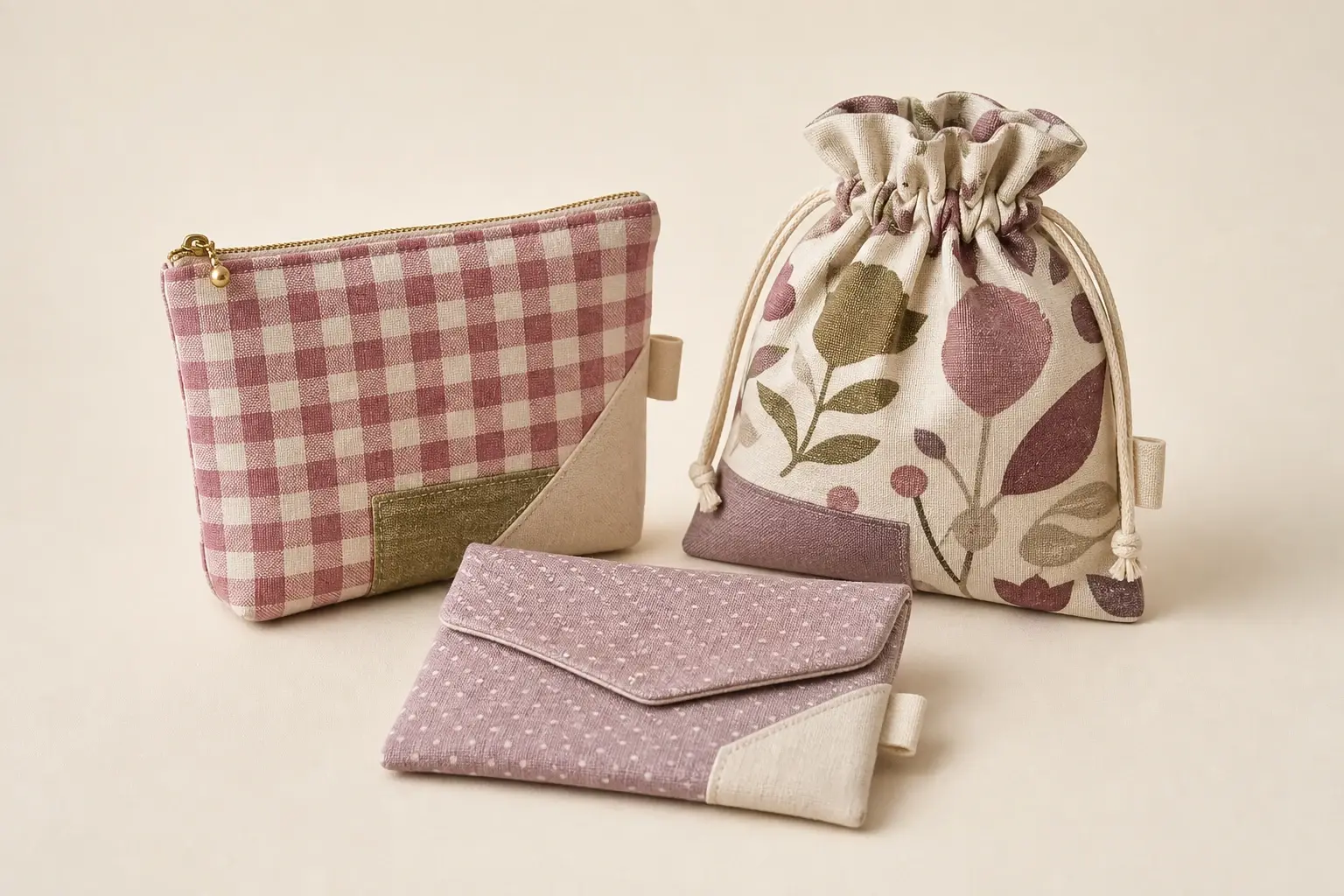
A useful small-batch product brief does not need to answer every technical question. It needs to make the important decisions visible: what the product must do, who it is for, which details are fixed, which details are preferences, and what the first sample must prove.
The conclusion: a short, well-labeled brief is more reviewable than a large mood board with no priorities. If a studio or production contact can identify the function, dimensions, material direction, quantity context and open risks, it can propose a credible next step instead of guessing.
The five decisions every brief should expose
1. Intended user and use
Start with one sentence that explains the user and the moment of use. “A soft sleep mask for a hotel retail set” is more useful than “a premium lifestyle accessory.” The first version points toward comfort, light coverage, laundering, branding and packaging. The second leaves every technical decision open.
For a hair accessory, describe the hair type, visual scale and wearing context. For a sleep mask, state whether coverage, pressure, light blocking, travel packability or gift presentation has the highest priority.
2. Function and dimensions
List what the product must hold, cover, fasten or withstand. Include dimensions when known. If they are not known, describe the object or body area the product must fit and provide a measured reference.
Separate functional dimensions from visual proportions. A bow width may be a style preference; elastic tension or eye coverage can affect use. Marking that difference helps the first sample focus on the higher-risk question.
3. Construction and material direction
Name the structure in plain language: lined or unlined, padded or flat, gathered or tailored, elasticated or tied, zipped or open. Add close-up references for details that are difficult to describe.
Material references should describe performance and feel as well as appearance. “Soft with a fluid drape and low surface shine” is more actionable than “luxury fabric.” If a specific fiber, certification, print process or color standard is mandatory, say so and provide the evidence or standard that must be followed.
4. Quantity and color plan
Provide a planning range and the proposed units by color. A total of 300 pieces across three colors is a different sourcing question from 300 pieces in each color. Fabrics, zippers, elastics, labels and packaging components may each have their own purchase minimum.
If the quantity is a demand test, state what the test should teach. That can support alternatives such as fewer colors, an available material, shared trims or simpler packaging without losing the purpose of the launch. Review the MOQ and sampling guide before treating a number as confirmed.
5. Brand and pack-out
Show logo artwork, placement, finished size and application method when available. Identify whether artwork is original, brand-owned or properly licensed. A reference from another brand may explain a construction detail, but it is not permission to copy the design, artwork or trade dress.
Packaging affects the product specification. State whether the item is folded, hung, placed in a pouch, wrapped with a paper band or packed as a set. Include barcode, care, warning, insert or retail-display needs before sample approval.
If the product will be sold in the United States, identify who is responsible for checking the applicable fiber-content, country-of-origin, company-identity and care-label requirements. The US Federal Trade Commission publishes a practical textile and wool labeling guide. Treat market requirements as an input to the brief and confirm them with the responsible adviser; a sample review is not legal approval.
Build the brief in seven steps
- Write the one-sentence use case. Name the user, product and moment.
- List three must-haves. These are the details that cannot be removed without changing the offer.
- List preferences separately. Color, stitch, finish or packaging ideas may be adjusted after feasibility review.
- Add measured information. Include dimensions, capacity, fit or the object the product must accommodate.
- Label every reference. Mark each image as silhouette, construction detail, material feel, color mood or packaging direction.
- Show quantity by variant. Include colors, sizes, sets and any acceptable consolidation.
- Define the first-sample question. State what must be true before the product can progress.
A compact copy-and-use checklist
- Project name and internal owner.
- Intended audience, use case and retail channel.
- Product type, dimensions and required function.
- Must-have construction details.
- Preferred material feel and allowed alternatives.
- Colors, units per color and total planning quantity.
- Logo, label, artwork and licensing status.
- Packaging and pack-out requirements.
- Target launch context.
- Target cost or retail context, if available.
- Reference images with a note for each.
- Open questions and the decision the sample must close.
What not to hide in the brief
Risk does not disappear when it is omitted. Call out uncertain fit, load-bearing hardware, exact color matching, limited stock fabric, custom-dyed components, tight retail pricing or a fixed event date. Early visibility gives the development team a chance to test, simplify or propose a backup.
Use reference and sample images to align the intended mood, silhouette and visible details without treating an image alone as a fixed production specification. Material behavior, construction quality, comfort and the project-specific production route are confirmed through physical sampling and written requirements.
Do not describe a target date as an accepted production promise. Sampling revisions, material availability and final approval affect the schedule. Use the date to explain priority, then confirm timing after the brief and supply path are reviewed through sampling and product development.
How Spulora reviews the brief
Spulora is an independent product-development and sourcing-coordination studio. A project may begin with an idea, reference image, tech pack or existing sample. We review what is fixed, what remains open and which manufacturing path may be credible. MOQ, sampling scope, materials, pricing and production timing are confirmed per project.
The output of an initial review may be a clarification list, a proposed material or construction direction, or a decision that the current route is not yet feasible. An inquiry does not mean sampling or production has already been accepted.
Frequently asked questions
Do I need a complete tech pack?
No. A tech pack is helpful when the design is already developed, but a labeled reference set and a clear use case can start an idea-to-sample discussion. The less technical detail you have, the more important it is to mark priorities and open questions.
Should I include a target price?
Yes, if it is connected to the selling channel and required product features. Treat it as commercial context, not as proof that the product can be made at that price before materials, construction, quantity and terms are reviewed.
How many reference images are useful?
Use the smallest set that explains the direction. Five labeled images are usually more useful than fifty unlabeled images. Avoid references that conflict without explaining which feature matters.
What should happen after the brief is ready?
Choose the most important unresolved question and make that the focus of the first review or sample. If the brief is ready, share the project details with any reference files you are authorized to use.
Sources and further reading
- US Federal Trade Commission: Clothing and Textiles
- US Federal Trade Commission: Threading Your Way Through the Labeling Requirements
These references support the preparation questions in this article. Requirements vary by product and market and should be confirmed for the actual project.