Practical guide

How to Choose a Small-Batch Sewn Product Direction

Choose a product direction by brand fit, use case, construction complexity and learning value instead of chasing a generic trend list.

Decision first

The best first direction is not the most novel item on a trend board. It is the product that makes the brand recognizable, solves a clear use case, fits a reviewable construction path and teaches the next useful commercial decision.

01

Choose the launch question before the product

A small batch should answer a question. A new brand may need to learn whether customers respond to its color story. A beauty brand may want a giftable extension that supports an existing launch. A retailer may need an add-on with a clear price point and compact shelf footprint. When the learning goal is explicit, product selection becomes narrower and more useful.

Avoid beginning with a list of unrelated trending items. Trend lists mix different audiences, price structures and production risks. Instead, write one sentence: “This launch should help us learn whether…” Then compare directions by how clearly they answer that sentence. A focused test is easier to brief, merchandise and evaluate than a collection built only to appear broad.

  • Demand test: which use case or visual story attracts attention?
  • Basket test: can a small accessory extend an existing purchase?
  • Gift test: does presentation support a seasonal or event-led offer?
  • Range test: which color or material deserves a repeat order?
02

Score brand fit before novelty

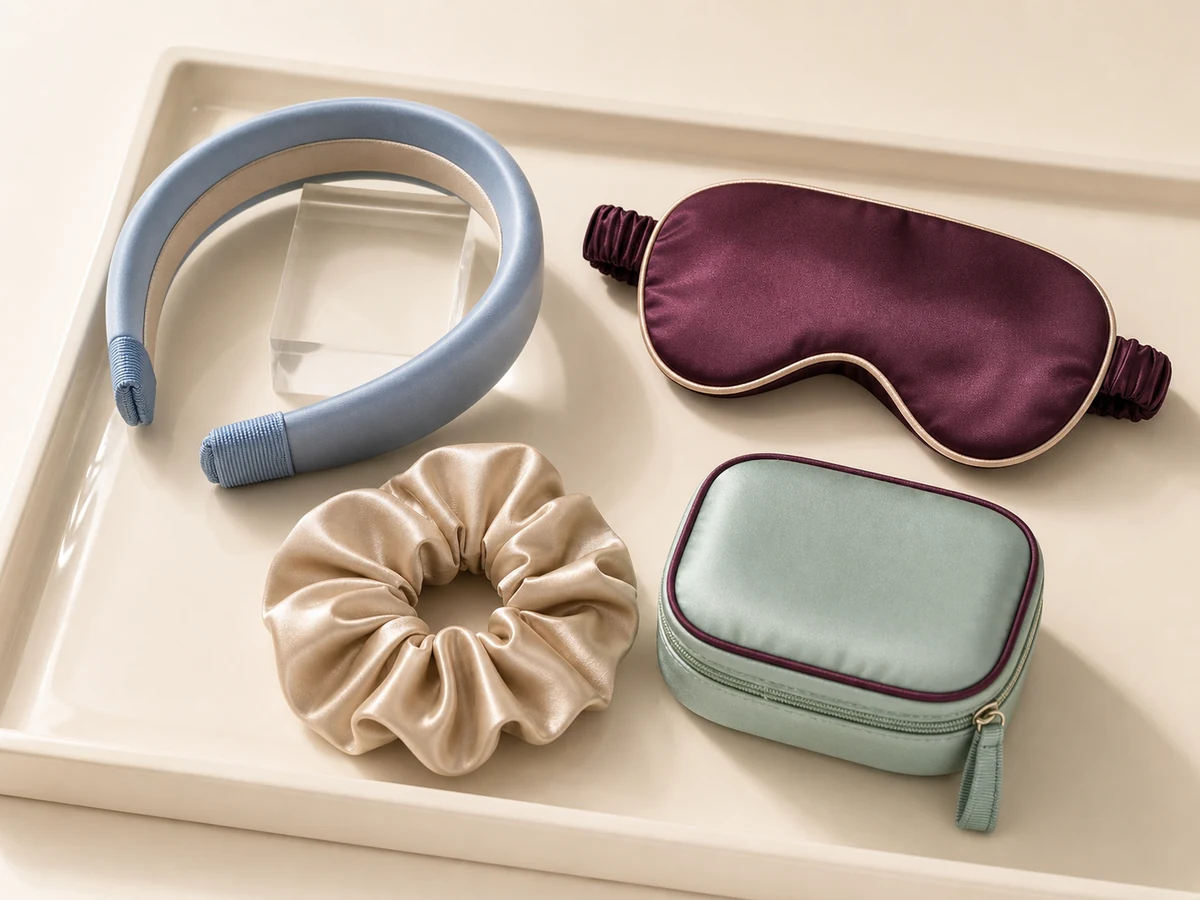
A product direction should feel credible beside the brand’s current offer. Look at audience habits, visual codes, retail channel and price expectations. Hair accessories can suit a fashion, beauty or creator-led brand because color and silhouette are visible. Sleep masks can support wellness, hospitality and gifting because comfort, surface feel and presentation are central.

Brand fit does not mean placing a logo on a generic item. Define how the brand appears through proportion, color, tactile contrast, stitching, label restraint and packaging voice. If the design depends on protected characters, copied artwork or another brand’s distinctive trade dress, stop and develop an original visual route or confirm licensing before sampling.

03

Match complexity to the evidence you already have

Construction complexity adds decisions and failure points. A gathered scrunchie or simple bow still requires proportion and finishing decisions, but it usually has fewer interfaces than a structured organizer with multiple compartments, hardware and load requirements. The more complex the product, the more precise the brief and sample review must be.

Early brands often benefit from a direction that expresses the visual idea without forcing too many new technical assumptions. An established buyer with a tech pack, tested dimensions or an existing sample can evaluate a more detailed design-to-production route. Complexity is not bad; unacknowledged complexity is what makes quotes and timelines unreliable.

  • Low interface count: fewer closures, components and fit relationships.
  • Medium interface count: lining, padding, elastic, embroidery or a pouch set.
  • High interface count: load-bearing hardware, many compartments, shaped fit or rigid inserts.
04

Use a product-direction matrix

Compare no more than three directions at a time. Score each one against brand recognition, usefulness, construction risk, material availability, packaging burden and content potential. The score is not a substitute for supplier review; it makes internal assumptions visible before money is spent on samples.

A direction with moderate novelty and strong brand fit may be more valuable than a highly novel object that requires unfamiliar hardware and a large custom component order. Record why each score was given. That note helps a studio or production contact propose alternatives without accidentally removing the feature that matters most.

  • Brand fit: would customers recognize the source without a large logo?
  • Use clarity: can the purpose be explained in one sentence?
  • Production path: are the construction and components reviewable?
  • Commercial fit: can likely cost and presentation support the channel?
  • Learning value: will results guide a repeat, color expansion or next product?
05

Plan color and material as a small system

A product range becomes more coherent when colors and materials have roles. Choose a lead color, a reliable commercial neutral and, only if useful, one test color. Repeating a lining, label or packaging format can connect the range while reducing component variation. A mixed-color launch still needs units and material consumption mapped by color.

Available fabric can create a limited-run story, but it should be treated as a verified input rather than an endless supply. Confirm stock, shade, defects and yield before publishing a fixed offer. If repeatability matters, prioritize a material route that can be reordered or define how future lots may vary.

06

Build bundles around one use moment

Bundles work when the items belong to the same moment, not simply because they share a fabric. A sleep mask and soft pouch can support travel or a bedtime ritual. Hair accessories can form a color or silhouette edit. Additional pieces should make the offer easier to understand, gift or use; otherwise they add sampling and inventory without strengthening the proposition.

Decide whether components are sold together or separately before packaging development. A fixed set affects pack-out, barcode strategy and quantity allocation. Separately sold items require their own labeling and stock plan. Keep the first bundle narrow enough that one weak component does not delay the entire launch.

07

Turn the direction into a sample brief

Once a direction is selected, write a brief with intended user, function, dimensions, construction references, material feel, color plan, branding, packaging, quantity range and target launch context. Mark must-haves, preferences and open questions. This lets the product-development review concentrate on feasibility rather than guessing which visual details are essential.

Ask the first sample to test the riskiest assumptions. For hair accessories, that may be scale, grip, gathering or comfort. For sleep masks, it may be coverage, light blocking, padding and elastic tension. Review the sample against the launch question, not just whether it resembles a mood board.

  • Select one lead direction and one backup, not six parallel concepts.
  • Label each reference image by silhouette, detail, material or mood.
  • Define what the sample must prove before adding more colorways.
  • Recheck MOQ, cost and timing after sample-driven changes.
08

Know when to stop or simplify

Pause a direction when it depends on unavailable material, unclear artwork rights, an untested safety or load requirement, or a price structure that does not fit the selling channel. Simplifying a closure, reducing component variation or using an available trim can be a valid product decision when the core customer value remains intact.

Do not hide unresolved risks behind a polished concept visual. Concept imagery can communicate mood and direction, but it is not evidence of construction, material quality or production capability. Move forward only after the brief, sample and supply route support the public promise the brand intends to make.

A trend signal is not proof of demand or production feasibility. Validate audience fit and the physical product separately.

Questions to resolve

Use the Guide Before You Request a Quote

These answers summarize the decision boundaries explained in the guide.

Should a first launch include several product categories?

Usually one lead direction creates clearer learning. Add a second item only when it supports the same use moment, audience and material or packaging system.

How should trend references be used?

Use them to discuss silhouette, function, color or presentation. Develop original brand-owned design work and do not copy protected artwork, licensed characters or another brand’s distinctive product.

Is the simplest product always the best first product?

No. The product must still carry the brand and solve a relevant use case. Choose the lowest complexity that can answer the launch question without removing the reason customers would care.

When should packaging enter the decision?

Before sample approval. Packaging affects dimensions, labels, pack-out, minimums, freight and how a bundle is sold, so it should not be left until bulk production.

Continue exploring

Connect the Decision to Products and Solutions

Use a real product direction and the relevant development path to turn the guide into a reviewable project brief.

Start with context

Ready to develop a small-batch textile product?

Share an idea, reference image, tech pack or existing sample. We will identify the next useful product and sampling decision.